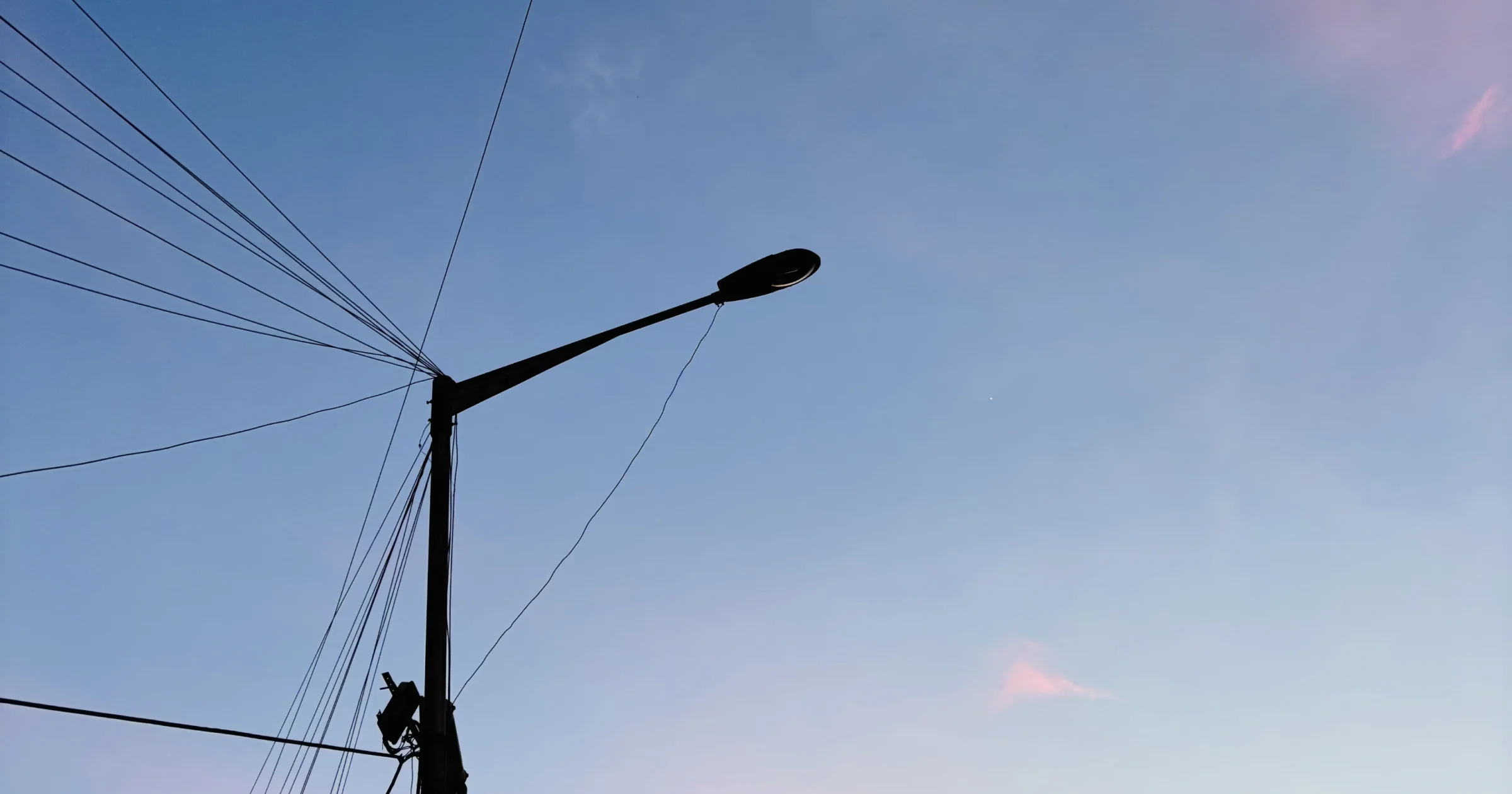
It took me a while to figure out what was bothering me.
I’d be walking home late, or waiting for an auto, and something about the street would feel off. Not scary exactly, not dirty, just quietly depressing in a way I couldn’t name at first. A kind of melancholy that hung on the pavement. The buildings looked slightly drained. My own shadow, when I noticed it, was doing strange things on the pavement, spreading out instead of pointing cleanly in one direction. The whole road had this washed-out, flat quality, like someone had turned down the saturation on the city.
Then I remembered what the streets used to look like.
When I was younger, Bengaluru nights had a color. That heavy amber glow from sodium vapor lamps, the kind that turned everything a little warmer and a little stranger than it looked in daylight. You knew you were outside at night because the light itself told you so. It had a personality. It made the trees look dramatic and the walls of buildings look like film sets. Honestly, it made the city look a little cinematic whether you wanted it to or not.
Now the streets are lit by cool white LEDs, and they look like the inside of a very cruel kafkaesque office (see: government offices).
The warmth is gone
The new light has no mood. It’s just illumination. And even that, barely. You could close your eyes and open them on a street at midnight or on a corridor of some badly lit hospital and it would take you a second to figure out where you were. That is the quality of these LEDs. They could be anywhere.
Sodium vapor, for all its faults, felt like it belonged to the place. Warm light just does something to brick and dust and trees that cold light does not. The streets used to feel lived in, but now all you feel is the hollow realisation that the city is evolving backwards.
One shadow used to be enough
The sodium vapour lamps had this bright, directional light that cast sharp, well-defined shadows. The contrast was genuinely great. Under the old lamps, when you walked, you had one shadow. Clear, pointing wherever the lamp wasn’t. You could use it to tell how far the next pole was. You could tell where you were standing relative to it just by the angle of your own shadow falling across the road. It was like a signal the street was constantly sending you.
These LED fixtures don’t have one single bulb. They have dozens of little emitters packed into a grid. Which means when you walk under them, you cast anywhere between four and nine shadows depending on the mood of the light at that point of time. Faint, overlapping, pointing in different directions, none of them committing to anything. A tree does the same. So does a parked bike, a lamppost, anything with shape to it. The road underneath looks confusing. Everything is outlined in these half-shadows that don’t add up to anything coherent.
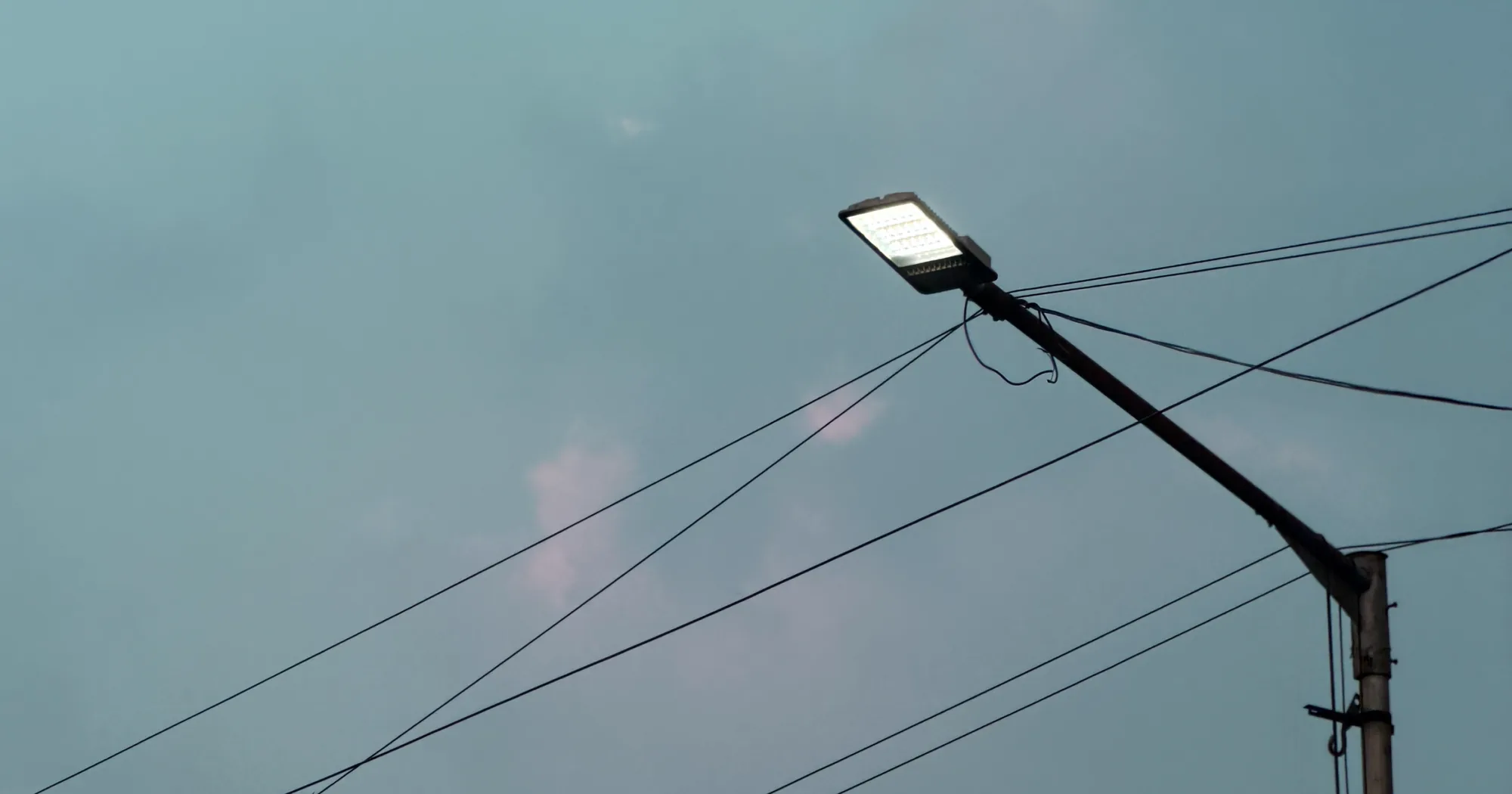 LED Array Abomination.
It sounds like a small thing. It isn’t, really. Our eyes are built to read shadows (real ones). Depth, shape, distance, movement, we get most of that information from how light falls on things and how dark falls around them. When the shadow information is muddled, you don’t notice it as muddled. You just feel like the world is slightly harder to read than it should be. Which is exactly what walking on these streets feels like.
The lights are not lighting the street
And here we are. One of my biggest complaints. The LEDs are somehow both cold and dim. I keep expecting brighter, because LED is supposed to mean modern, and modern is supposed to mean better. But walking between two of these poles (assuming both are even working properly), you can actually feel the dark in the middle. There’s this small puddle of weak light under each fixture, and then the road dips back into gloom until the next one. The old sodium vapor lamps, whatever else you want to say about them, made the road feel continuously lit. These don’t. They dot the road with little islands of tired grey.
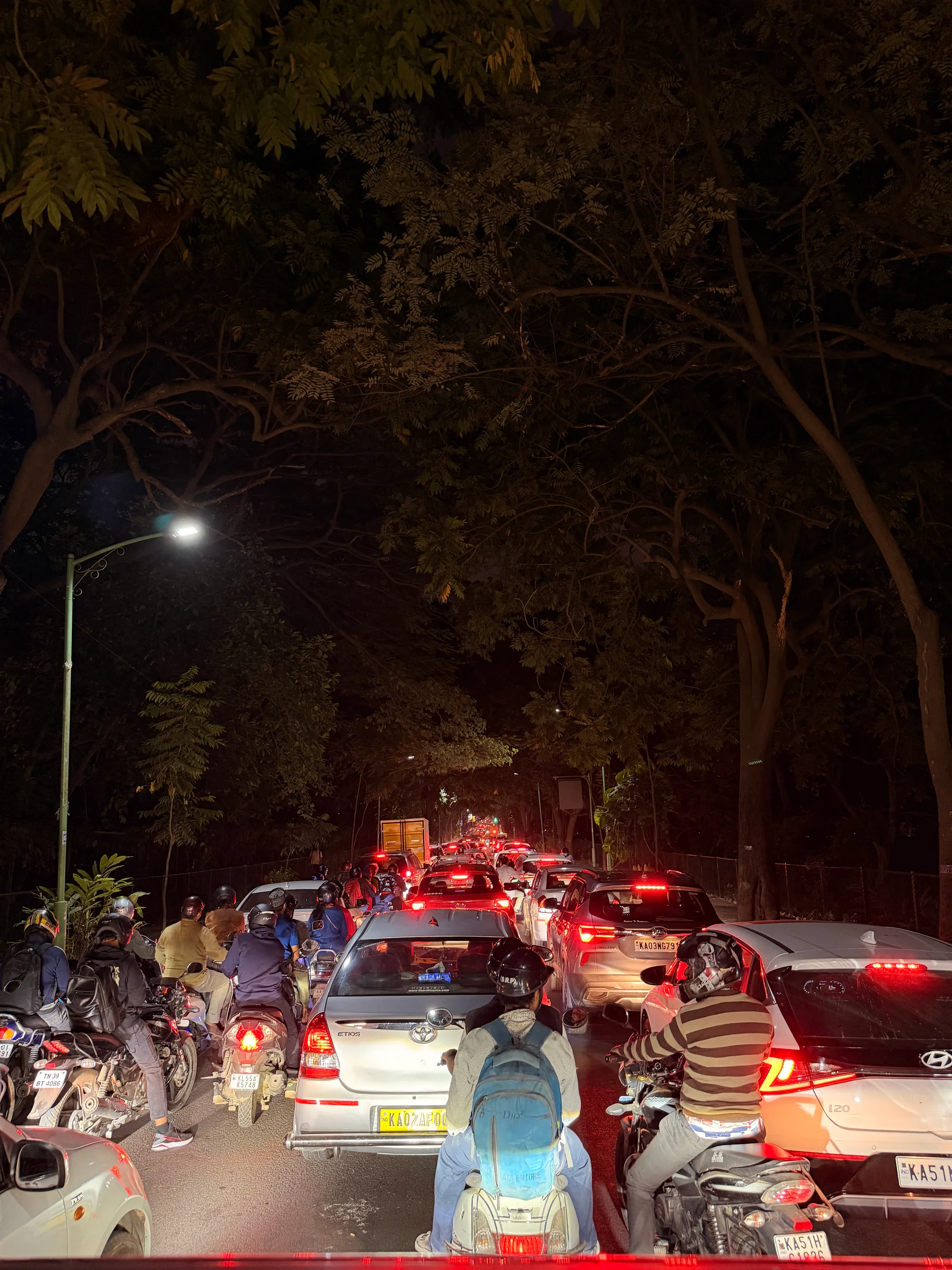 Emotional support streetlight.
I don’t know if it’s the wattage, the spacing, the angle of the optics, or all three. Probably all three. But as someone walking or driving at night, I don’t care about the reason. I just know that the street is darker than it used to be, and it fuckin’ sucks.
Flat everything
Under the old lamps, a street at night had depth to it. Bright surfaces, dark recesses, warm highlights on people’s faces, pools of shadow where you couldn’t see clearly but your brain filled in the shape. You could sense the geometry of the place even when you couldn’t see all of it. Now everything is the same dull grey-white from end to end. The walls and the road and the signboards all blend into one wash. There’s no contrast, no staging, no sense that one thing is closer or farther than another. Just a flat grey image of a city.
The color was bad but the contrast was honest, and a dishonest grey turns out to be much worse than a bad orange.
I want to be fair here. Sodium vapor was not some lost golden age. The color rendering was genuinely terrible. You couldn’t tell a red shirt from a brown one under those lights. Everything was orange and that was the end of it. If you were trying to match clothes by the light of a street lamp, you were out of luck. I’m not writing a love letter to them.
What I am saying is that they had one job and they did it well. They lit the street and made it readable. You knew where things were. You knew where you were. The color was bad but the contrast was honest, and a dishonest grey turns out to be much worse than a bad orange.
What we stopped noticing
I think the thing that gets me most about all this is how quietly it happened. Nobody really announced it. There was no public debate about what color the streetlights should be, or how bright, or how the new ones would feel to walk under at 11 p.m. on a Tuesday. One day there were amber lamps and then there were fewer of them, and more of these cold little arrays appearing on the poles, and at some point the switch was done and nobody had been asked.
We stopped paying attention to what light does to a place. To how it shapes whether a street feels alive or dead, yours or no one’s, like a neighborhood or like a parking lot. And we traded something specific and warm for something efficient and blank, and now we have a city that looks vaguely worse after sunset for reasons most of us can’t articulate.
The street hasn’t changed. The buildings haven’t changed. The trees and the pavement and the people walking home are all the same. Only the light changed. And it turns out the light was doing more work than we realized.